Savings rates
Rates reviewed daily · last updated 5 October 2026
Savings rates
All rates AER · Updated October 2026
Rates shown are AER and correct as of October 2026.
Regular Saver
| Account | AER | Monthly Limit | Interest | Min Balance | |
|---|---|---|---|---|---|
| Flex Regular Saver | 6.50% | £200 | Variable | £0 |
Cash ISA
| Account | AER | Access | Transfers in | Min Balance | |
|---|---|---|---|---|---|
| 5 Year Fixed Rate Cash ISA | 4.70% | 5 Years | Accepted | £1 | |
| 3 Year Fixed Rate Cash ISA | 4.65% | 3 Years | Accepted | £1 | |
| 2 Year Fixed Rate Cash ISA | 4.55% | 2 Years | Accepted | £1 | |
| 1 Year Fixed Rate Cash ISA | 4.50% | 1 Year | Accepted | £1 | |
| 1 Year Triple Access ISA | 3.30% | Max 3 withdrawals/year | Accepted | £1 |
Fixed Rate
| Account | AER | Term | Interest paid | Min Balance | |
|---|---|---|---|---|---|
| 5 Year Fixed Rate Online Bond | 4.65% | 5 Years | Annually | £1 | |
| 3 Year Fixed Rate Online Bond | 4.60% | 3 Years | Annually | £1 | |
| 2 Year Fixed Rate Online Bond | 4.55% | 2 Years | Annually | £1 | |
| 1 Year Fixed Rate Online Bond | 4.50% | 1 Year | Annually | £1 |
Easy Access
| Account | AER | Access | Interest | Min Balance | |
|---|---|---|---|---|---|
| 1 Year Triple Access Saver | 3.30% | Max 3 withdrawals/year | Variable | £0 | |
| Flex Instant Saver | 2.30% | Instant | Variable | £1 | |
| Instant Access Saver | 1.10% | Instant | Variable | £0 |
Cards
The Nationwide cards we track. Open one for fees, perks and the catch.
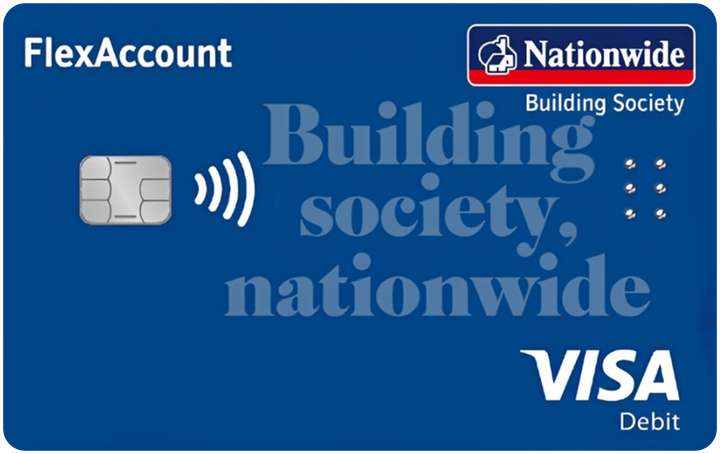
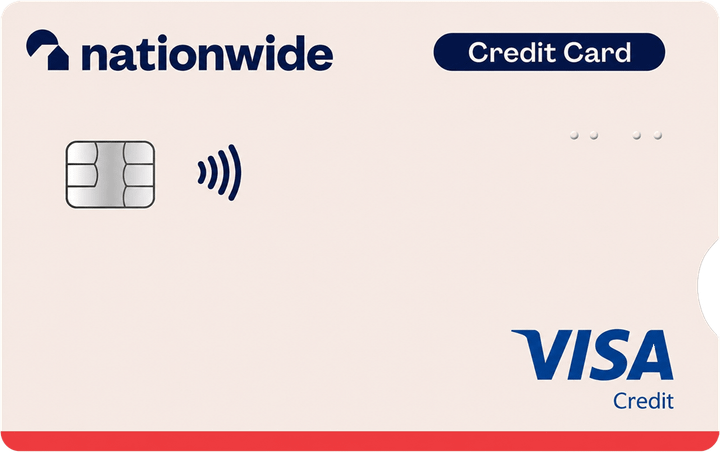
Member
Free
The everyday card for spending abroad
- Abroad
- Fee-free spending
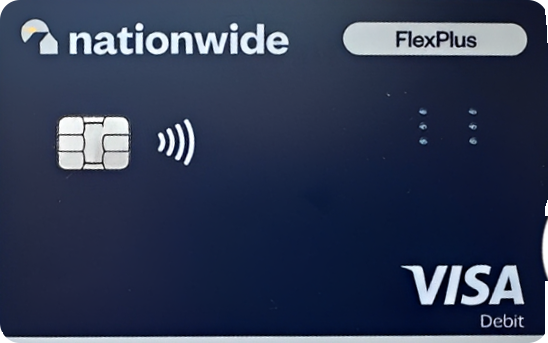
FlexPlus
£18 per month
The one with travel, phone and breakdown cover
- Yearly cost
- £216
- Abroad
- Fee-free spendingFee-free withdrawals
Is Nationwide FSCS protected?
Yes — FSCS protected up to £120,000
Yes. Nationwide savings are FSCS protected up to £120,000 per person, per banking licence, under Nationwide Building Society.
Banking licence: Nationwide Building Society
Last checked against the FCA register on 5 October 2026.
See every brand that shares a banking licenceSwitch offers
- Complete a full Current Account Switch Service switch within 28 days, closing the old account and moving at least two active Direct Debits.
- Pay in £1,000 within 31 days of account opening or applying to switch to an existing account.
- Make at least one qualifying debit card payment within the same 31-day period.
- Switch using the Current Account Switch Service
- Complete switch within 28 days including transfer of at least 2 Direct Debits and closure of old account
- Deposit £1,000 and make at least 1 debit card payment within 31 days of account opening.
- Complete a full Current Account Switch Service switch within 28 days, closing the old account and moving at least two active Direct Debits.
- Pay in £1,000 within 31 days of account opening or applying to switch to an existing account.
- Make at least one qualifying debit card payment within the same 31-day period.
Who they are
Nationwide Building Society is a British mutual financial institution and the largest building society in the world.
The society was established through the consolidation of over 250 smaller UK building societies throughout the 20th century. Because it is a mutual, it has no external shareholders demanding dividends - profits are instead reinvested for the benefit of members. That difference shapes everything from the rates it offers to the way it is run.
In October 2024, Nationwide completed its £2.9 billion acquisition of Virgin Money UK, adding over 6.6 million customers and expanding its customer base to more than 24.5 million. Virgin Money operates as its own legal entity with its own banking licence for now, so if you hold money with both Nationwide and Virgin Money, your FSCS protection applies separately to each. Nationwide's eligible deposits are protected by the FSCS up to £120,000 per person, per authorised firm (banking licence).
Savings accounts
Nationwide's range spans everything from instant-access pots to long-term fixed ISAs, so there is usually something that fits whatever you are trying to do.
The headline rate for regular savers is 6.50% AER on the Flex Regular Saver, though this is a variable rate and you will need a Nationwide current account to qualify. On the fixed side, the Fixed Rate Online Bonds run from one to five years, with rates currently sitting at 4.50% for one year rising to 4.65% at five years. Cash ISA savers are well catered for too - the fixed ISA range starts at 4.50% for one year and reaches 4.70% for five years, with a £1 minimum deposit making them accessible to almost anyone. If you want some flexibility, the Triple Access Saver and Triple Access ISA each pay 3.30% and allow up to three withdrawals per year before the rate falls. The basic Flex Instant Saver and Instant Access Saver offer genuine instant access, though their rates are noticeably lower. There are also children's accounts - the FlexOne Saver pays 5.00% for younger savers.
As always, rates are variable where stated and can change. The live figures shown on this page are the ones to go by.
Switching to Nationwide
Nationwide currently offers a £175 cash bonus for switching to any of three accounts: the FlexAccount, FlexDirect, or FlexPlus. To qualify for all three you need to use the Current Account Switch Service, close your old account, move at least two active direct debits, pay in £1,000, and make at least one debit card payment - all within set time limits, so read the conditions carefully before applying.
The FlexAccount and FlexDirect carry no monthly fee. The FlexPlus costs £18 a month but comes with worldwide family travel insurance, AA breakdown cover, and family mobile phone insurance - worth comparing against standalone policies if you already pay for those separately. FlexDirect also adds 1% monthly debit-card cashback for the first 12 months and 5% AER on balances up to £1,500 when account conditions are met.
There is no stated deadline on any of the three offers at the moment, but switch bonuses can be withdrawn at any time, so it is worth acting if you are genuinely considering a move.
Is it right for you?
Nationwide suits savers who want a proper institution with a long track record, a branch network, and a decent spread of savings products under one roof. The mutual structure means there are no shareholders to satisfy, and the Fairer Share payment - a periodic cash payment to eligible members - is a genuine perk that most banks simply cannot replicate.
The trade-off is that Nationwide is rarely the outright market leader on easy-access rates, and the best accounts tend to require an existing current account with them. If you want to park a large lump sum at the very top rate, you may need to look elsewhere. But for organised savers who want fixed ISAs, a regular saver, and a switch bonus all in one place, it is a strong option.
Check the live rates on this page before you open anything - they are updated regularly and will always reflect what Nationwide is actually paying right now.
This overview was generated by DepositScout's AI, Penny on 2 October 2026. It may contain inaccuracies — always confirm rates and terms with Nationwide directly. Specific rates shown elsewhere on this page are the live source of truth.