
How to Budget for a Savings Goal in the UK
5 Aug 2026 · 6 min read · Updated 5 Aug 2026
Most people don’t fail at saving because they’re “bad with money”. They fail because the budget never becomes a plan — a clear goal, a monthly number, and a place for each pound to go.
This guide walks through a practical UK approach to how to budget for a savings goal, then shows how PlanScout turns that budget into real account recommendations from today’s market rates.
What “budgeting for savings” actually means
A spending budget answers “what can I afford this month?”. A savings budget answers three sharper questions:
What am I saving for? (house deposit, emergency fund, wedding, holiday)
How much do I need, and by when?
Where should the money sit so it earns a competitive rate without locking you into the wrong account?
If you only do step 1 and 2, you’re guessing. Step 3 is where most DIY budgets fall apart — people dump everything into one easy-access account, or chase the highest AER without checking whether they can actually pay money in each month.
Step 1: Name the goal (be specific)
Vague goals get vague results. “Save more” is not a budget. “£10,000 house deposit in two years” is.
Pick one primary goal first. You can run a second plan later for an emergency fund or holiday — stacking every wish into one pot makes the monthly number feel impossible.
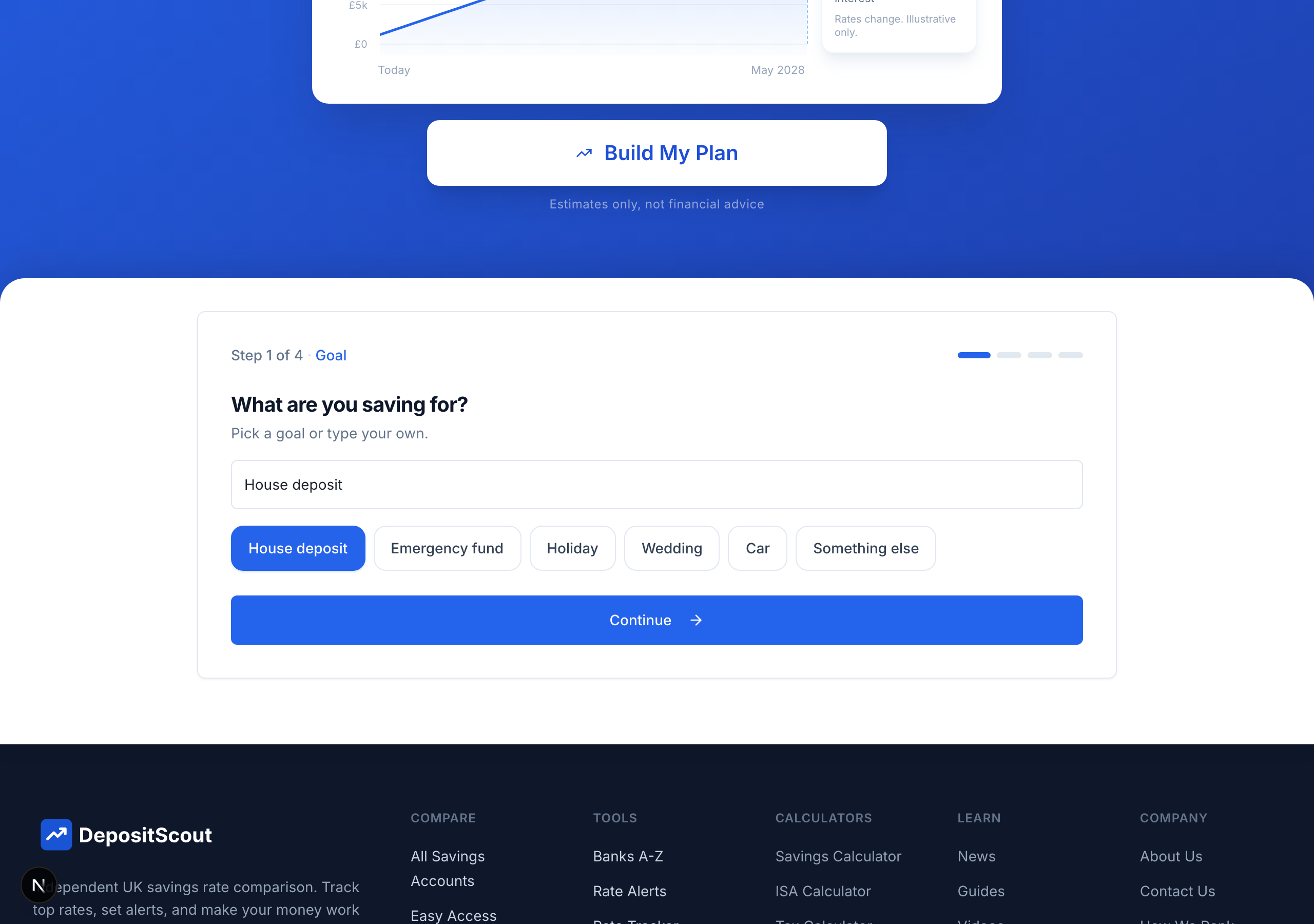
Step 1 — name the savings goal you’re budgeting for.
In PlanScout, you start with the same question: what are you saving for? Use a preset or type your own.
Step 2: Set the target amount
Write down the real number — not a rounded dream figure you’ll quietly ignore. Include fees, buffer, and (for a house deposit) the extras people forget: solicitor costs, surveys, and moving.
If you’re unsure, start with a stretch target and a “good enough” target. Your monthly budget should be built around a number you can actually hit.
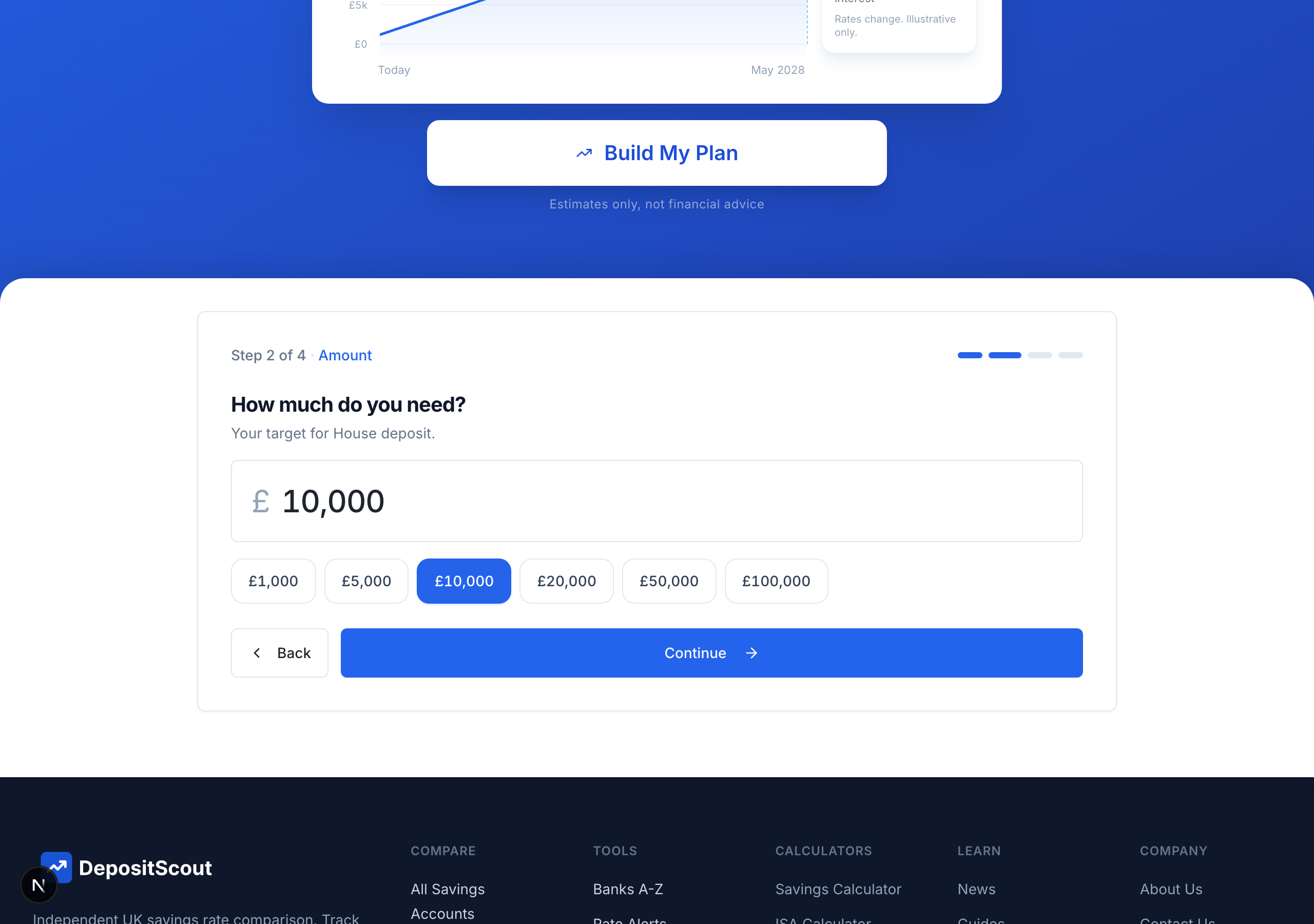
Step 2 — set the target amount your budget needs to hit.
Step 3: Choose a deadline (this sets the monthly budget)
Timeline is the lever that turns a goal into a monthly savings budget. Roughly:
Monthly savings ≈ (target − money you already have) ÷ months left
Then add a little headroom. Rates help, but they won’t rescue a plan that needs £800/month when you can only spare £300.
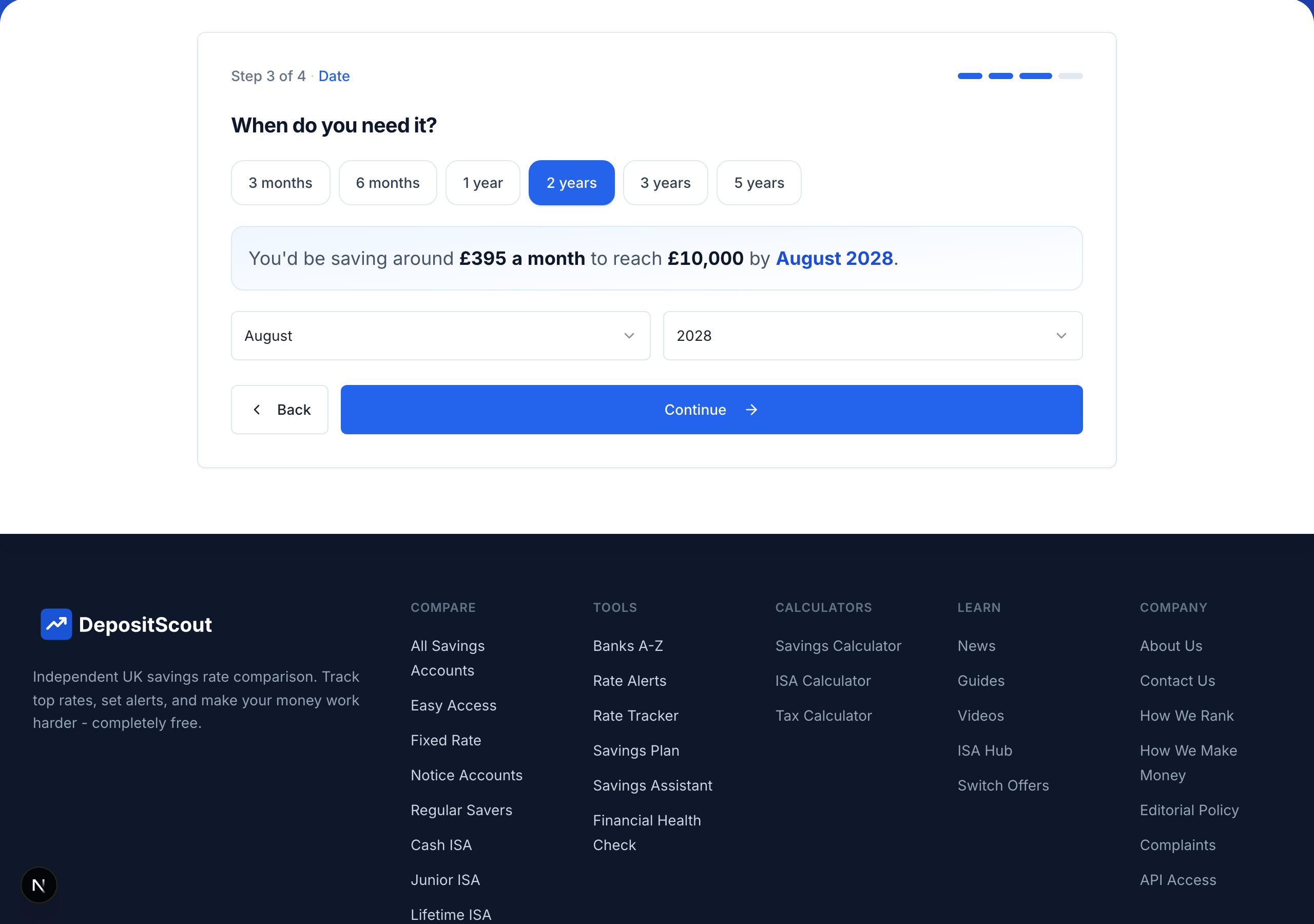
Step 3 — pick a deadline; the monthly savings number appears straight away.
PlanScout does this instantly — pick “2 years” (or any horizon) and it shows the approximate monthly amount needed for your target.
If the monthly number feels too high, change the deadline or the target before you open accounts. Fix the budget maths first — product shopping second.
Step 4: Separate lump sum money from monthly money
This is the budgeting move most comparison tables can’t make for you.
Lump sum (money you can put in now) often suits a fixed-rate bond or Cash ISA if you won’t need it early.
Monthly contributions often suit a regular saver (high AER, capped monthly deposits) with overflow into easy access.
Money you might need anytime should stay in easy access — even if the rate is a little lower.
Tell the planner what you can put in up front. That changes which accounts make sense.
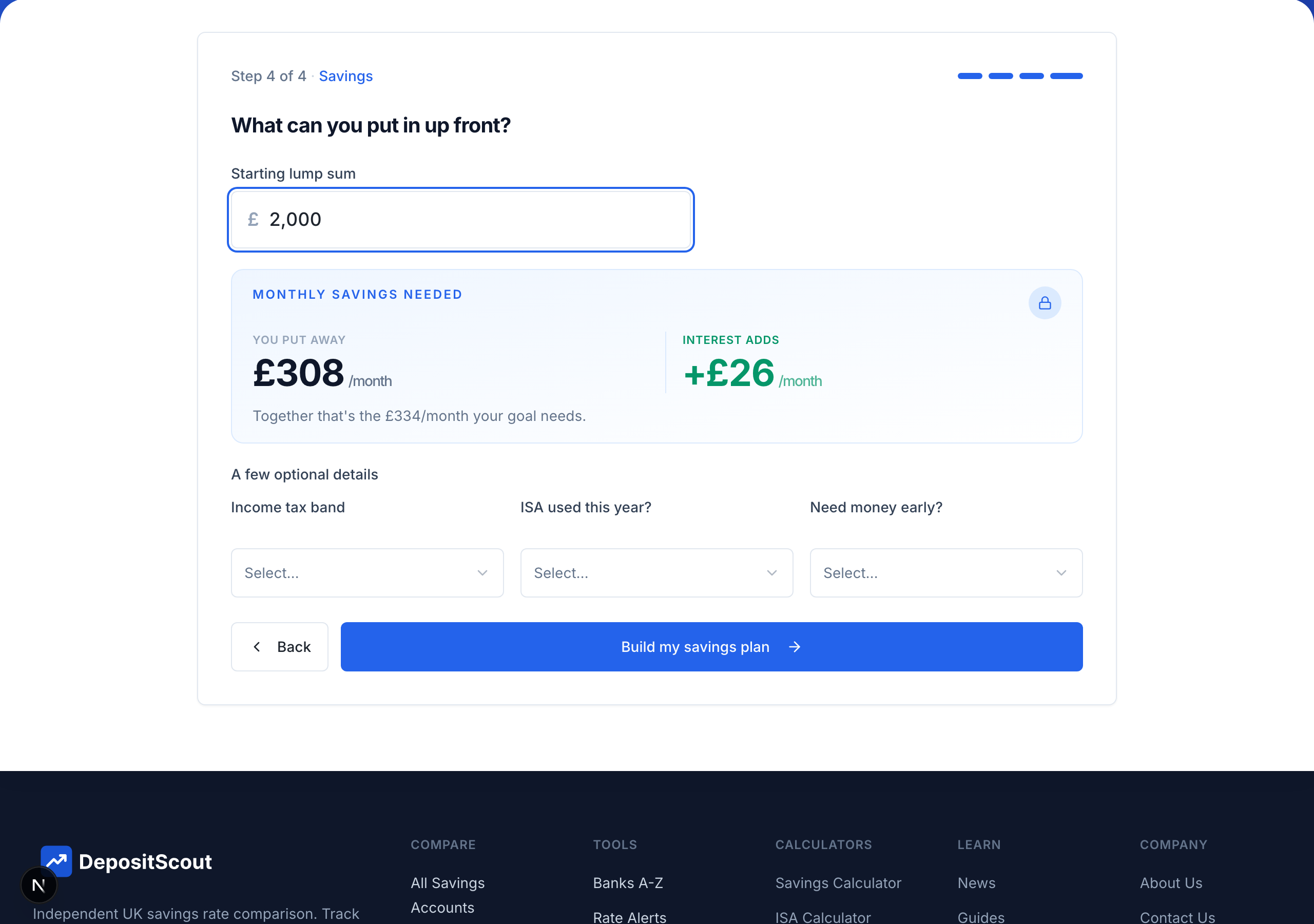
Step 4 — say what you can put in up front before the plan is built.
Step 5: Turn the budget into accounts (not vibes)
Once you have a goal, amount, date, and starting balance, you need accounts that match how the money arrives — not just the highest AER on a best-buy table.
That’s what PlanScout is built for. It scans the live UK savings market and builds a plan: which account for the lump sum, which for the monthly standing order, how much to pay in, and when key dates land.
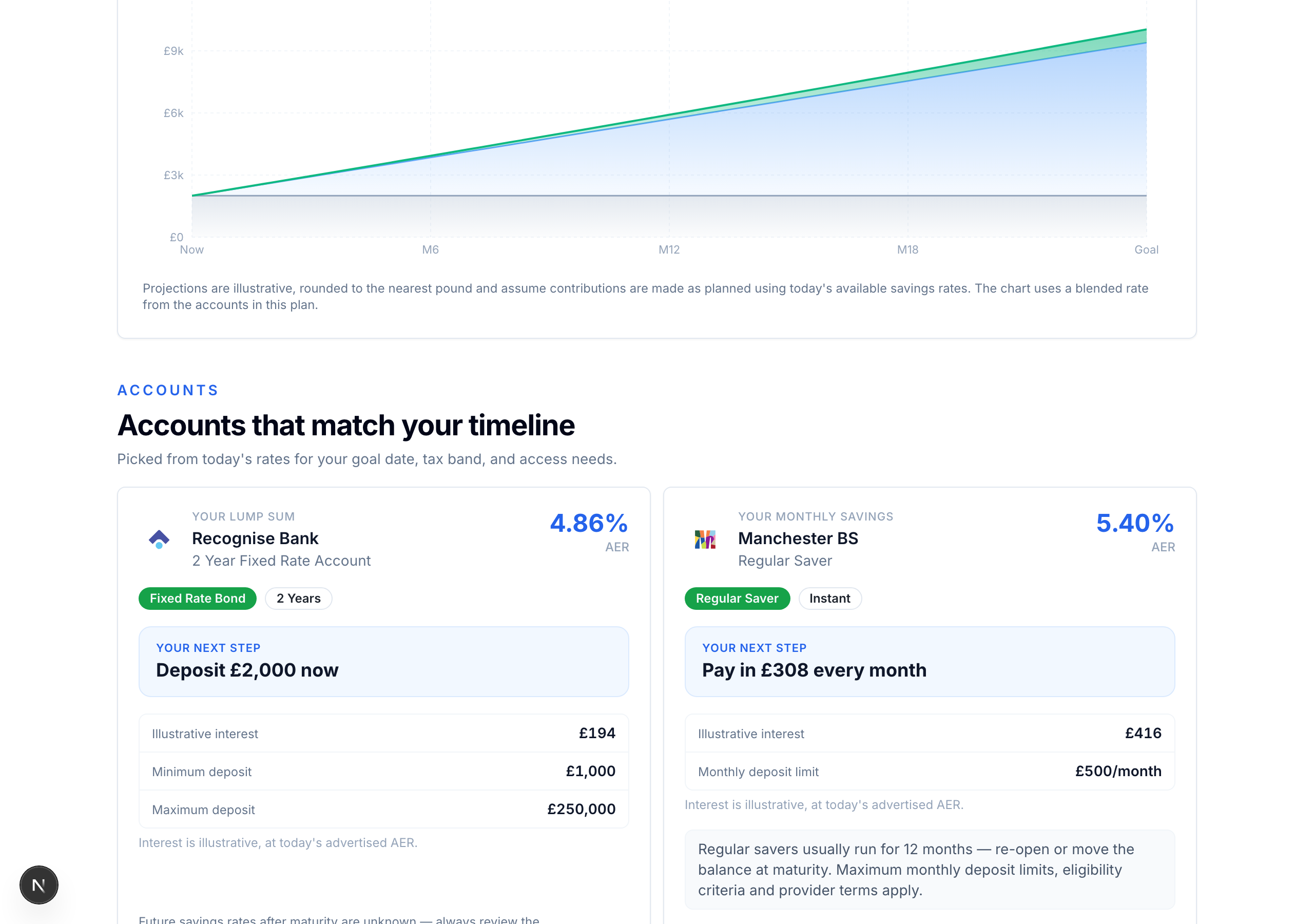
Your budget becomes a plan: lump sum account, monthly account, and illustrative growth.
In the example above, a £10,000 house-deposit goal over two years with £2,000 up front becomes a concrete next step: deposit the lump sum into a matching fixed account, and pay a set amount into a regular saver each month.
A simple monthly budgeting routine that sticks
Tools help, but habits finish the job. Keep this lightweight:
Payday + 24 hours: move the planned savings transfer first (pay yourself before lifestyle spend).
One standing order per pot: lump sum is a one-off; monthly savings should be automatic.
Cap lifestyle leakage: if a month runs hot, cut discretionary spend — don’t “borrow” from the savings standing order.
Review quarterly: rates move. Rebuild the plan when a fix matures, a bonus ends, or your goal date changes.
If you want a deeper look at regular savers (powerful, but easy to misuse), read our guide on regular savers. For tax wrappers around cash savings, see the best Cash ISA options.
Common budgeting mistakes (and the fix)
Chasing the top rate with the wrong account type — a 5% account you can’t fund monthly is useless for a budget. Match funding rules to your standing order.
Ignoring access needs — emergency money in a fixed bond is a false economy.
No deadline — without a date, “I’ll save when I can” becomes never.
One pot for every goal — house deposit + holiday + rainy day in one balance makes you raid the important goal first.
Forgetting tax — larger balances can push interest over your Personal Savings Allowance; a Cash ISA may belong in the plan.
Build your savings budget in minutes
You don’t need a 20-tab spreadsheet to budget for a savings goal. You need a clear target, an honest monthly number, and accounts that fit how you save.
Open PlanScout, enter your goal, and get a plan built from today’s UK savings rates — free, with illustrative projections (not financial advice).
Then compare the wider market anytime on our live savings rate tables, or browse providers in the Banks A–Z.
Related Topics
Related Guides
Regular Savers: Get One, Just Don't Mistake It for a Savings Account
Santander has just launched a market-leading 8% Regular Saver, but before you rush to open it, read this first.
Best Cash ISA UK (2026): Top Easy-Access & Fixed Options Compared
Looking for the best Cash ISA in the UK right now? Here’s a clear, data-driven comparison of the top rates.
Notice Accounts Explained: Are They Worth It?
Do notice accounts still make sense? We compare July 2026's top rates and the premium for waiting 90 days has all but vanished.