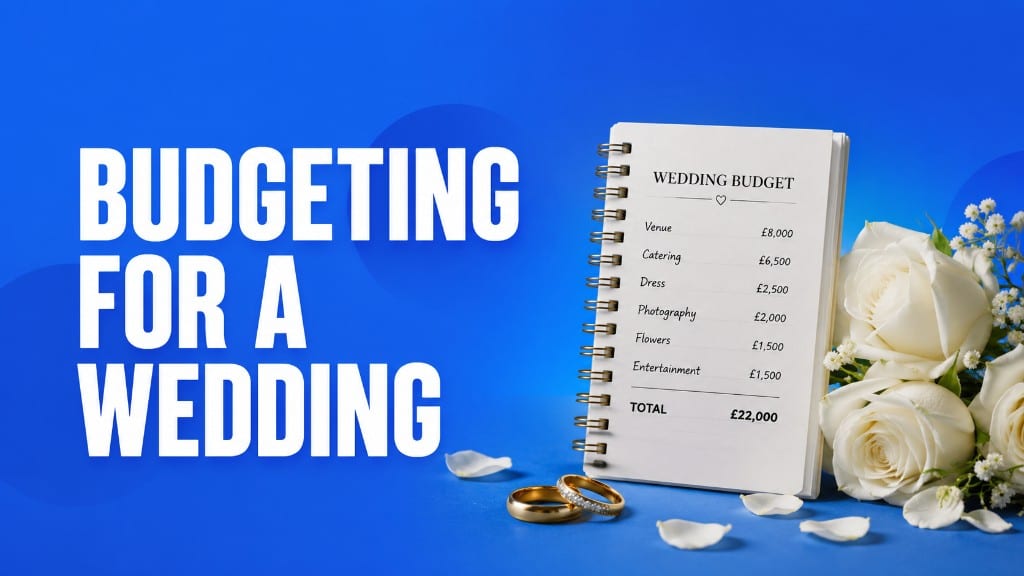
Budgeting for a Wedding in the UK
8 Sept 2026 · 9 min read
The average UK wedding in 2026 costs around £21,990, according to Hitched's national survey. That's a number big enough to make most couples wince — and it's exactly why so many wedding budgets fall apart before the invitations go out.
The good news: that figure is an average, not a target. Plenty of couples marry beautifully for a third of it. What separates the couples who stay in control from the ones who start married life in debt isn't income — it's having a budget that's realistic from day one, and a savings plan that actually gets them there. Here's how to build both.
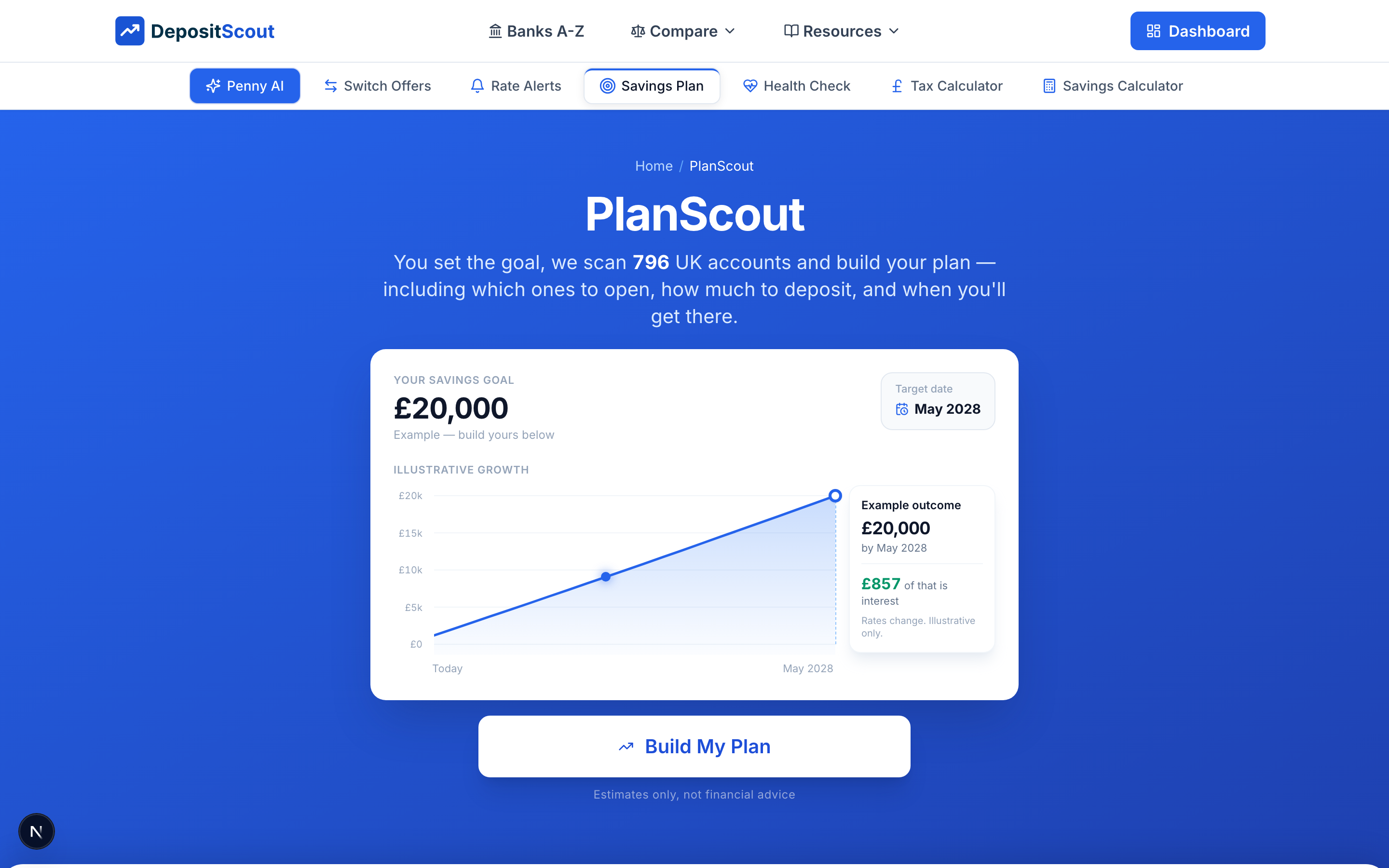
DepositScout's free PlanScout planner turns your wedding target and date into a month-by-month savings plan, drawn from live UK savings rates.
What a UK wedding actually costs in 2026
Start with real numbers so your budget is grounded in reality, not a Pinterest board. The two big UK wedding surveys put the 2026 average at:
£21,990 — Hitched National Wedding Survey
£20,604 — Bridebook UK Wedding Report
The difference comes down to what each survey counts, but both land in the same £20,000–£22,000 ballpark. Worth knowing: the average spend per guest is now around £272, which is why the guest list is the single biggest lever on your total cost — more on that below.
Here's roughly where the money goes for a typical mid-range UK wedding, so you can see what's worth protecting and what's easy to trim:
| Item | Typical share of budget | Rough cost on a £20k wedding | |---|---|---| | Venue hire | 20–25% | £4,000–£5,000 | | Catering & drinks | 20–25% | £4,000–£5,000 | | Photography / videography | 8–12% | £1,600–£2,400 | | Attire (both partners) | 8–10% | £1,600–£2,000 | | Flowers & styling | 5–8% | £1,000–£1,600 | | Music / entertainment | 4–6% | £800–£1,200 | | Rings | 4–5% | £800–£1,000 | | Stationery, cake, extras | 5–8% | £1,000–£1,600 | | Contingency | 5–10% | £1,000–£2,000 |
Two things to notice. First, venue and catering together eat roughly half your budget — so that's where big decisions get made. Second, that contingency line is not optional. Weddings always throw up costs you didn't plan for, and a buffer is what stops them landing on a credit card.
Step one: decide your total number first
Most couples do this backwards. They pick a venue, then a dress, then a photographer, and only add it all up when it's too late to change course. Do it the other way round.
Agree a total you're both comfortable with before you fall in love with anything. That number should be built from three sources:
What you can save between now and the wedding
What family are contributing — 61% of UK couples receive gifted money from family, so have the awkward conversation early and get a real figure, not a vague "we'll help"
What you already have set aside
Add those up, and that's your ceiling. Everything else — the guest list, the venue, the flowers — flexes to fit it. Not the other way round.
Step two: turn the total into a monthly savings figure
This is where a wedding budget becomes a plan rather than a wish. Take the amount you need to save, divide by the number of months until the wedding, and you have your monthly target.
Say you need to save £12,000 (with family covering the rest of a £20k wedding) and you're 20 months out. That's £600 a month between the two of you — £300 each. Suddenly the abstract £20,000 becomes a concrete, checkable number you either hit or you don't.
DepositScout's Savings Plan tool does exactly this. Enter your target and your wedding date and it works out the monthly figure, then tells you which type of account to hold the money in so it's growing while you save. It's built for goals with a fixed deadline — which is precisely what a wedding is.
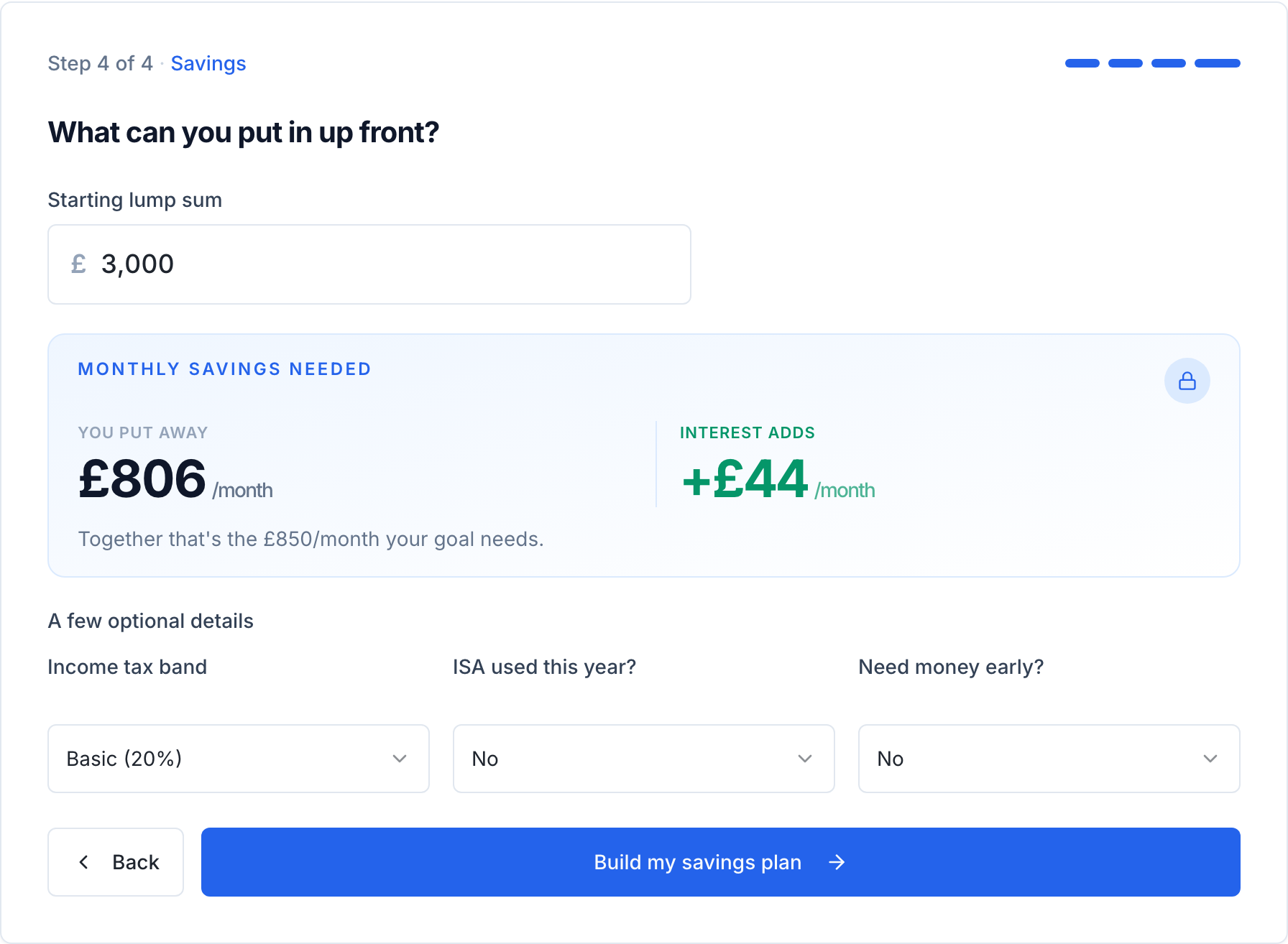
Add a starting lump sum and PlanScout splits the target into what you put away each month and what interest contributes — here, £806 a month towards a £20,000 wedding.
Step three: choose the right account for wedding savings
Where you keep the money depends on how far away the big day is. Getting this right can add hundreds of pounds to the pot for no extra effort.
Wedding more than 12 months away? A fixed-rate bond locks in a guaranteed rate — around 5% AER as of August 2026 — on money you know you won't touch. The trade-off is you can't access it until it matures, so only fix money you're certain you won't need before the wedding.
Saving month by month? A regular saver account is the hidden gem here. The best pay 6–7% AER — well above easy access — in exchange for a fixed monthly deposit, usually capped at £200–£300. Two of you each paying into one can shelter a big chunk of your monthly saving at a premium rate. Many require you to hold the provider's current account, so check the conditions.
Want flexibility, or the wedding is soon? An easy-access account (around 5% AER at the top, often bonus-boosted for the first year) keeps the money reachable for deposits and final payments as suppliers demand them.
Many couples use a combination: a regular saver for the monthly contributions, and easy access for the deposits and lump sums. If either of you pays tax on savings interest, consider doing it inside a cash ISA to keep the interest tax-free — though note the cash ISA allowance drops to £12,000 for under-65s from 6 April 2027.
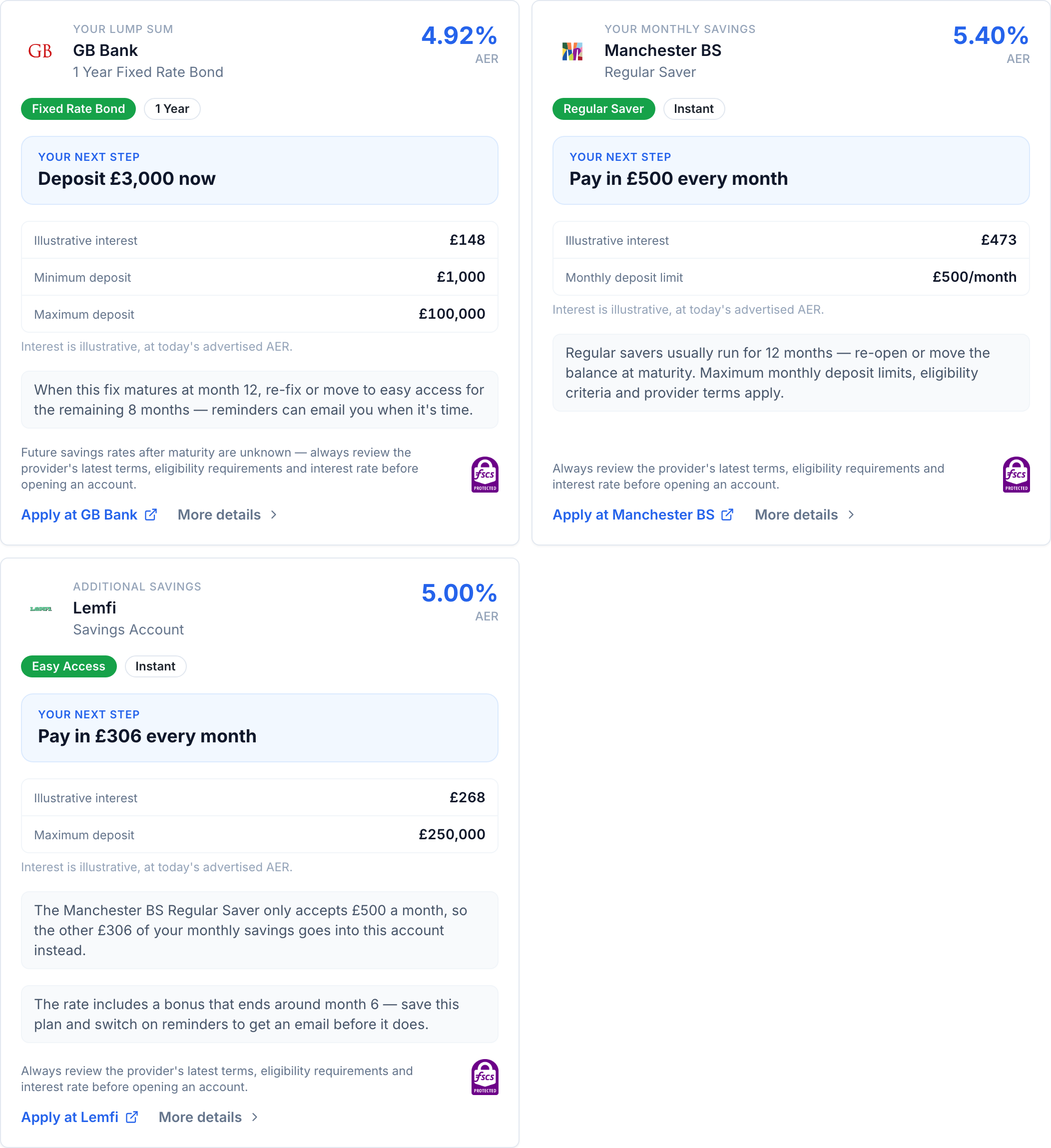
This is the layering in practice: PlanScout puts the lump sum in a fixed-rate bond, routes monthly contributions into a regular saver, then sends the overflow to easy access — each account picked for the wedding timeline, and each FSCS-protected.
Whatever you choose, keep each provider's balance under the £120,000 FSCS limit (you almost certainly will) so it's fully protected.
Where couples overspend — and how to avoid it
A few patterns show up again and again. Knowing them in advance is half the battle.
The guest list is the budget. At around £272 a head, every 10 guests you add costs roughly £2,700. Trimming an over-optimistic list is the fastest way to bring a wedding back within budget — far more effective than haggling over flowers.
Saturdays in summer cost a premium. The same venue can be dramatically cheaper on a Friday, a Sunday, or off-season. If your date is flexible, this is one of the biggest savings available, and no guest will remember which day of the week it was.
"It's only £50" adds up fast. Chair covers, favours, an extra hour of photography, a sparkler send-off — each feels trivial, but a dozen small upgrades quietly add a thousand pounds. Decide upfront which three or four details genuinely matter to you, and be ruthless about the rest.
Not tracking as you go. A budget you set once and never look at is a fantasy. Check your actual spend against your plan every month so overspends surface while there's still time to fix them.
How to save for a wedding when money's tight
If the monthly number looks scary, you have three levers, and you can pull all of them:
Extend the timeline. A longer engagement means smaller monthly payments. Moving from an 18-month to a 30-month engagement can nearly halve what you need to save each month.
Lower the total. Revisit the guest list and the date. These two decisions move the number more than anything else.
Boost income temporarily. Funnelling overtime, a side gig, or wedding gift money straight into the pot can close the gap without touching your normal budget.
The couples who feel calm on the day are almost never the ones who spent the most. They're the ones who set a realistic number early and saved towards it steadily — so the bill was already paid long before it arrived.
Common questions
How much should I save each month for a wedding? Take your total target, subtract any family contribution and existing savings, then divide by the number of months until the wedding. A £20,000 wedding with £8,000 gifted and 20 months to go means saving £600 a month between you. Our Savings Plan tool works this out for you.
How far in advance should I start saving? As early as you can — a longer runway means smaller, more manageable monthly amounts and lets you use higher-paying accounts like fixed bonds and regular savers. Most couples are engaged for 12–24 months, which is ideal for this.
Is it worth using a credit card for wedding costs? Only for the protection, not the debt. Paying deposits on a credit card can give you Section 75 cover if a supplier goes under — but clear the balance in full each month. Going into a new marriage with wedding debt at credit-card interest rates is the outcome this whole plan exists to avoid.
What's a realistic budget for a small UK wedding? Plenty of couples marry well for £5,000–£10,000 by keeping the guest list tight, choosing an off-peak date, and prioritising a couple of things they truly care about. The average is £22,000, but it is nobody's target but your own.
The bottom line
Decide your total first, split it into what you'll save and what family will give, then turn the savings half into a monthly figure and a deadline. Hold the money somewhere it earns a real rate — a regular saver or fixed bond if time allows, easy access for flexibility — and check your progress every month.
Know your date? Build your free Savings Plan and we'll turn your wedding budget into a month-by-month plan, with the right account to hold your savings in along the way.
Cost figures from Hitched and Bridebook 2026 surveys. Rates and allowances correct as of August 2026 and can change. General information, not personal financial advice.
Related Topics
Related Guides
How to Save £20k in a Year
Saving £20,000 in a year means £1,667 a month. An honest look at whether it's realistic for you, how to structure it, and the accounts that quietly add hundreds to your total.
How to Budget for a Savings Goal in the UK
A simple UK budgeting method: set a goal, work out the monthly number, then put every pound in the right account.
Cash ISAs in 2026: The Simple Guide
Cash ISAs let your savings grow tax-free up to a £20,000 annual allowance. Here’s how they work in 2025, who they suit, how transfers and “flexible” ISAs work, and what protections apply.
Related News
ISA Deadline 2026: Don’t Just Use This Year’s Allowance!
The ISA deadline is near. Check old Cash ISAs, compare top rates, and avoid poor returns.
Best Cash ISAs Right Now: Why the Highest Rate Isn't Always the Best!
A new £20,000 ISA allowance landed on 6 April — and the Cash ISA market is moving fast.
Bank of England Holds Rates at 3.75% – What It Means for Savers
The Bank of England has held the base rate at 3.75%, here's what it means for savers.